Why 'Pedo' Means Everything in Mexico (One Word, Twelve Jobs)
Pedo literally means fart.
In Mexican Spanish, it means: problem, situation, fight, party, drunk, vibe, guy, plan, mood, deal, beef, and "what's up." One word. Twelve jobs. None of them in your textbook.
Linguists, if they cared about Mexican Spanish at all, would call this semantic bleaching. The word's original literal meaning has been worn down by use until almost nothing of it remains. What's left is pure social glue.
Mexicans don't call it bleaching. Mexicans call it efficient.
A quick note on register
Before I write another word: pedo is informal. Not vulgar exactly, but informal. You can use it with friends, with peers, in casual contexts. You cannot use it in a business meeting, at church, with your partner's grandmother (unless she's been let in on the joke), or with a stranger older than you.
This is a slang post. I'll cover the rules of when to deploy it at the end. For now, ride with me.
The twelve uses, ranked by frequency
Every one of these I've heard in the wild in the Yucatán in the last six months.
1. As "what's up?" "¿Qué pedo, wey?" "What's up, dude?" The most common greeting between Mexican men under 50. Universal. Casual.
2. As "problem." "No hay pedo." "No problem." Used to reassure. Probably the most-useful sentence a foreigner can learn.
3. As "drunk." "Está bien pedo." "He's really drunk." Direct, literal. Estar pedo = to be drunk.
4. As "situation" or "deal." "¿Cuál es el pedo?" "What's the deal? / What's the situation?" The verbal equivalent of an Anglo "so what's going on?"
5. As "fight" or "beef." "Hubo un pedo con el vecino." "There was a fight with the neighbor." Implies conflict, often physical or at least intense verbal.
6. As "party" (rare but real). "Vámonos al pedo del viernes." "Let's go to Friday's party." Less common than fiesta, but used among young people.
7. As "guy" or "person." "Hay un pedo en la puerta." "There's a guy at the door." Like wey, the word has been worn down into a stand-in for "human person."
8. As a vibe or mood descriptor. "Está de buen pedo." "He's in a good mood." "Anda de mal pedo." "He's in a bad mood." The shift from concrete to abstract is complete.
9. As "plan." "¿Cuál es el pedo para la noche?" "What's the plan for tonight?"
10. As "deal" (interpersonal). "¿Cuál es tu pedo conmigo?" "What's your deal with me? / What's your problem with me?" Slightly confrontational. Used to ask what someone wants or what they're angry about.
11. As a hedge against direct expression. "Pues… ese es otro pedo." "Well, that's another matter." The mildest, most universal use. Pedo as substitute for "thing" or "issue."
12. As filler. "Pues, ya estuvo pedo." "Well, that was something." At this point we've completely left the realm of meaning. Pedo is a placeholder. The sentence works without it. But it doesn't sound Mexican without it.
What's actually going on
This is semantic bleaching at scale. Pedo started as a specific bodily reference (fart). Over generations of Mexican usage, the literal meaning got too vulgar to use in polite company, but Mexicans wanted to keep the word. So they wore it down.
The vulgar core got buried. The shell of the word remained. The shell became a Swiss-army-knife placeholder for any unspecified situation that two people are jointly discussing.
It's the same mechanic that turned English crap from a literal noun into a casual general-purpose word. Same trajectory. Different word.
The Mexican version went much further than the English version. Crap still mostly refers to unwanted stuff. Pedo refers to literally anything.
Why this matters culturally
In a culture committed to no quedar mal (don't come off badly), having a word that means any unspecified problem is incredibly useful.
If someone tells you "hay un pedo," you don't yet know what's happening. You can react carefully. You can ask follow-ups. You can manage the bond before you know the actual content.
If someone tells you "no hay pedo," you have permission to relax without knowing the exact thing that was previously the pedo.
The vagueness is a feature. It gives the relationship room to negotiate before the actual content arrives.
In English, we'd say "there's an issue" or "there's a problem." But those words are slightly heavier. They commit you to taking it seriously. Pedo commits to nothing. It just names the existence of a thing without specifying what kind of thing.
This is genuinely useful linguistic engineering.
How to use it without sounding like a fool
Four rules.
1. Start with no hay pedo. This is the safest entry. Someone apologizes for something. You say "no hay pedo." You've just used Mexican slang correctly with zero risk.
2. Add ¿qué pedo? as a greeting with people who already use it with you. Don't initiate. Wait for it to be offered. If your Mexican friends say "¿qué pedo?" to you, return it.
3. Avoid the vulgar registers (drunk, fight, problem) until you've been here a year. These need tonal calibration that you don't have yet. Use está borracho instead of está pedo if you mean drunk. Use problema instead of pedo if you mean problem.
4. Never use it in formal contexts. Workplace. Wedding. With your partner's grandmother. With anyone over 60 who hasn't already started using it with you.
If you violate any of these, nothing terrible happens. The Mexican response is a soft smile, a polite continuation, and the gentle relief of the bond protecting itself from your inexperience.
The lesson, as always: Mexico will not correct you. It will only quietly recalibrate. Watch for the recalibration. That's how you learn.
Why this is the most Mexican word
I've lived in 6 cities. I've collected slang in every one of them. The British have bloody. The Australians have yeah-nah. The South Africans have eish. The Americans have fuck. The Canadians have eh.
Each one is multi-purpose. None of them are pedo.
Pedo is the only word I know that bleaches a vulgar concrete original into a near-universal placeholder, while remaining the most-used informal word in the culture. It's a linguistic feat. The fact that nobody outside Mexico has ever heard of it tells you everything about how Mexican Spanish goes its own way.
Bad at 6 languages. Currently obsessed with this one.
30-second version is on the channel: Why "PEDO" Means EVERYTHING in Mexico. Tell me what other words deserve this treatment. I've got a list of about twelve.
The app for real Mexican Spanish: PalabraFlow.
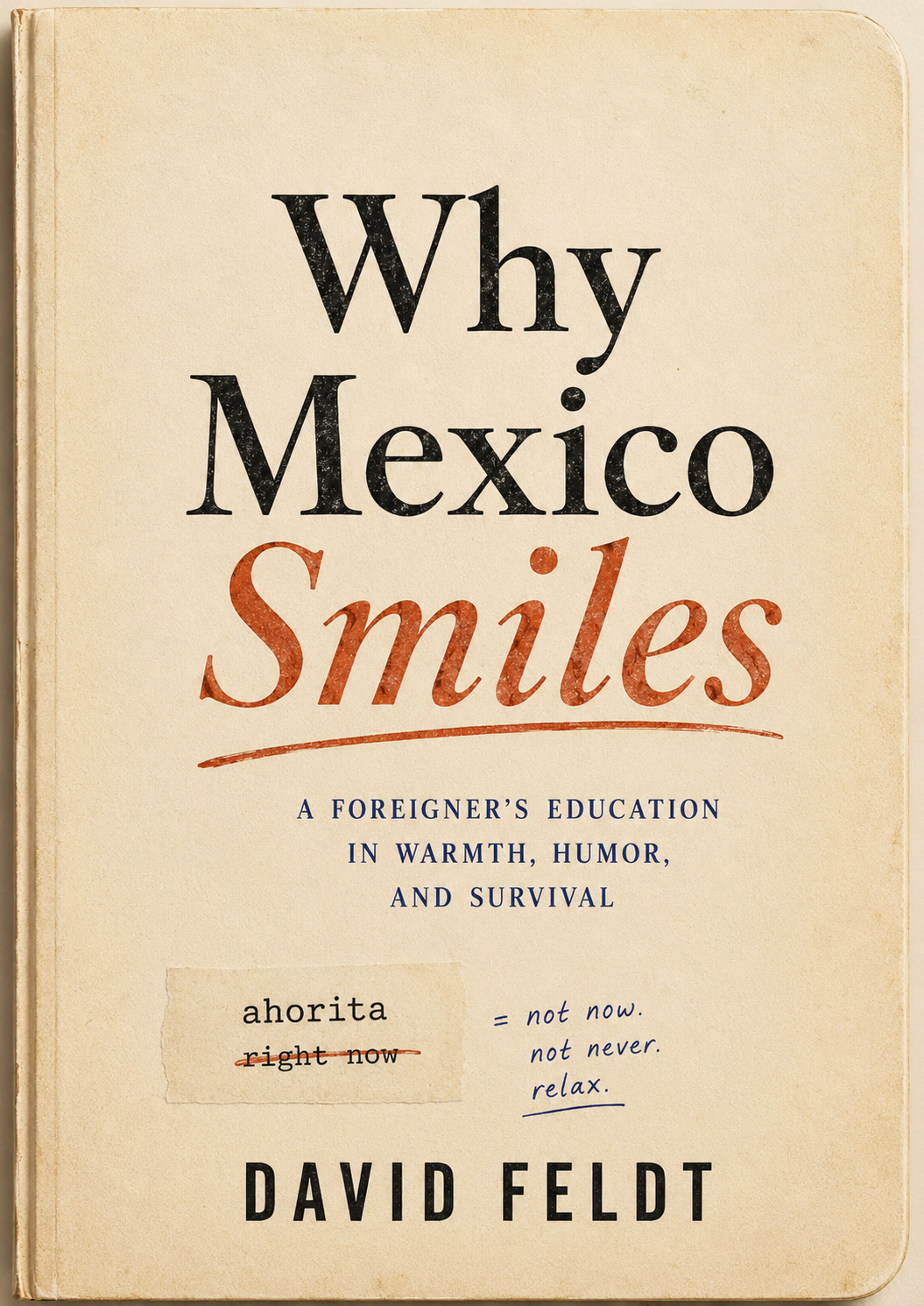
Why Mexico Smiles
A Foreigner's Education in Warmth, Humor, and Survival
A foreigner comes to Mexico to learn a language and instead learns why Mexicans are the way they are. Read Chapter 1 free, or take home the whole thing.

PalabraFlow
Your conversation operating system for Mexico
40 real-life situations, practiced out loud with an AI tutor that talks back in Mexican Spanish and scores how you sound. Stop translating, start answering.