The Most Mexican Word Ever: NETA (And the 8 Ways to Use It)
Neta is Mexican for truth. It's also Mexican for really, no kidding, for real, I swear to god, you don't say, are you serious, and absolutely. One word. Eight jobs. Said about fourteen times an hour by anyone under fifty.
It is also a word that does not exist, in this register, in any other Spanish-speaking country. Walk into a café in Madrid and say "la neta es que…" and they will look at you like you've grown a second head.
This is Mexican Spanish doing what Mexican Spanish does. Inventing a word so flexible that it replaces an entire family of English ones.
What it literally means
Neta derives, probably, from the Spanish nítida (clear, neat) or possibly from neto (net, after deductions). Either way the root is "clear and uncluttered." The Mexican usage takes that core meaning and runs in every direction.
Today, neta in Mexican Spanish means:
- The truth
- The unfiltered version
- The honest answer
- The real thing
- Reality, as opposed to politeness
When a Mexican says "la neta es que…" they are not just saying "the truth is…" They are signaling: I am about to drop the warm cultural wrapper and tell you the actual fact. Brace yourself.
It's a tonal warning system.
The eight ways it gets used
Here is the field guide. Every example below is a real thing I have heard in the wild.
1. As a noun: the truth. "La neta es que no me caía bien." "The truth is, I didn't like him."
2. As a question: really? "¿Neta?" "Really?" Said with rising tone, often with raised eyebrows. Same energy as the English no kidding?
3. As an exclamation: no way! "¡Neta!" Said with falling tone, often after surprise. Same energy as get out! or no way!
4. As a confirmation: for real. "Sí, sí, neta. Te lo juro." "Yes, yes, for real. I swear."
5. As a hedge against being doubted: I'm serious. "Es buenísimo el lugar, neta." "The place is amazing, I'm serious."
6. As a softener for a hard truth: honestly. "Neta, no creo que funcione." "Honestly, I don't think it'll work."
7. As a one-word agreement: absolutely. "Neta." Said as a complete utterance, in agreement with what someone else just said. Compresses "yes, that's true, you're right" into two syllables.
8. As an intensifier of feeling: so much. "Neta lo quiero un chingo." "I really love it a ton." (The neta there is doing modifier work, like English legitimately.)
Eight registers. One word. No textbook will tell you about most of these.
Why no Spanish class teaches neta
Spanish textbooks are written, mostly, by people trained in peninsular Spanish (the Spanish from Spain). They cover Latin American variations as a footnote. They certainly don't cover slang that's specific to one country.
Neta is specific to Mexico. Possibly some parts of Central America by spillover. But it's a Mexican word in the same way cheers is a British word: technically intelligible elsewhere, but it would feel forced.
When you use neta in Mexico, you sound like someone who has spent time here. When you use it in Spain, you sound like someone who learned Spanish from Mexican TV. Both are signals. Pick the right one for the room.
The cultural mechanic
Why does Mexico need a word for "the truth"?
Because Mexico, more than most cultures, softens its truth as a matter of course.
If you've read anything else on this site, you've seen this pattern. Mexicans don't say no. They say déjame ver. Mexicans don't say I dislike that. They say está tantito complicado. Mexicans don't say you're wrong. They say interesante perspectiva.
In a culture that is this committed to warmth-over-directness, there needs to be a release valve. A way to signal "I am about to set aside the warmth and tell you the actual thing."
That release valve is neta.
When a Mexican says "la neta es que…" they are not just sharing information. They are suspending the social rule. For one sentence, the politeness contract is off. The truth is going to come out, and then the politeness contract resumes.
This is why neta is so beloved. It's not the truth itself that's the prize. It's the permission the word gives. The brief moment of relief from the constant gentle negotiation that Mexican social life requires.
How to use it
If you're a Spanish learner and want to deploy neta without sounding like a tourist trying out slang, three rules.
1. Earn the moment. Neta is for moments of real exchange. Don't sprinkle it into transactional Spanish ("la neta es que quiero tres tacos" sounds insane). Use it in conversation, when something is actually being honestly discussed.
2. Read the register. Neta is informal. Don't use it with elders you don't know well. Don't use it in a business meeting. Don't use it at a wedding when meeting your partner's grandmother. The word is for friends, peers, and casual interactions.
3. Start with ¿neta? as a one-word response. Easiest entry. Someone tells you something surprising. You say "¿neta?" You get an instant Mexican response. You'll know you've passed when the next thing they say is faster and more relaxed than before.
The two-syllable word is the unlock. After that, the whole register opens up.
What it tells you about Mexican Spanish
I've lived in 6 cities. Every language I've studied has a word that does what neta does, but in a narrower way.
- British English has honestly and no kidding, but they don't cover all the registers.
- French has franchement, close but not as common.
- New York English has for real and no joke, informal but narrower.
- Toronto has actually, used apologetically.
- Joburg English has I tell you, which is closer than most.
None of them are neta. None of them work as both a noun, a question, an exclamation, a confirmation, a hedge, a softener, an agreement, and an intensifier. None of them carry the permission-to-be-direct mechanic underneath.
Neta is, genuinely, one of the things Mexican Spanish does better than any language I know.
That's the neta about neta.
30-second version of this is on the channel: The Most Mexican Word Ever: NETA. Tell me I'm wrong in the comments. La neta es que I love being wrong about this stuff.
The app for real Mexican Spanish: PalabraFlow.
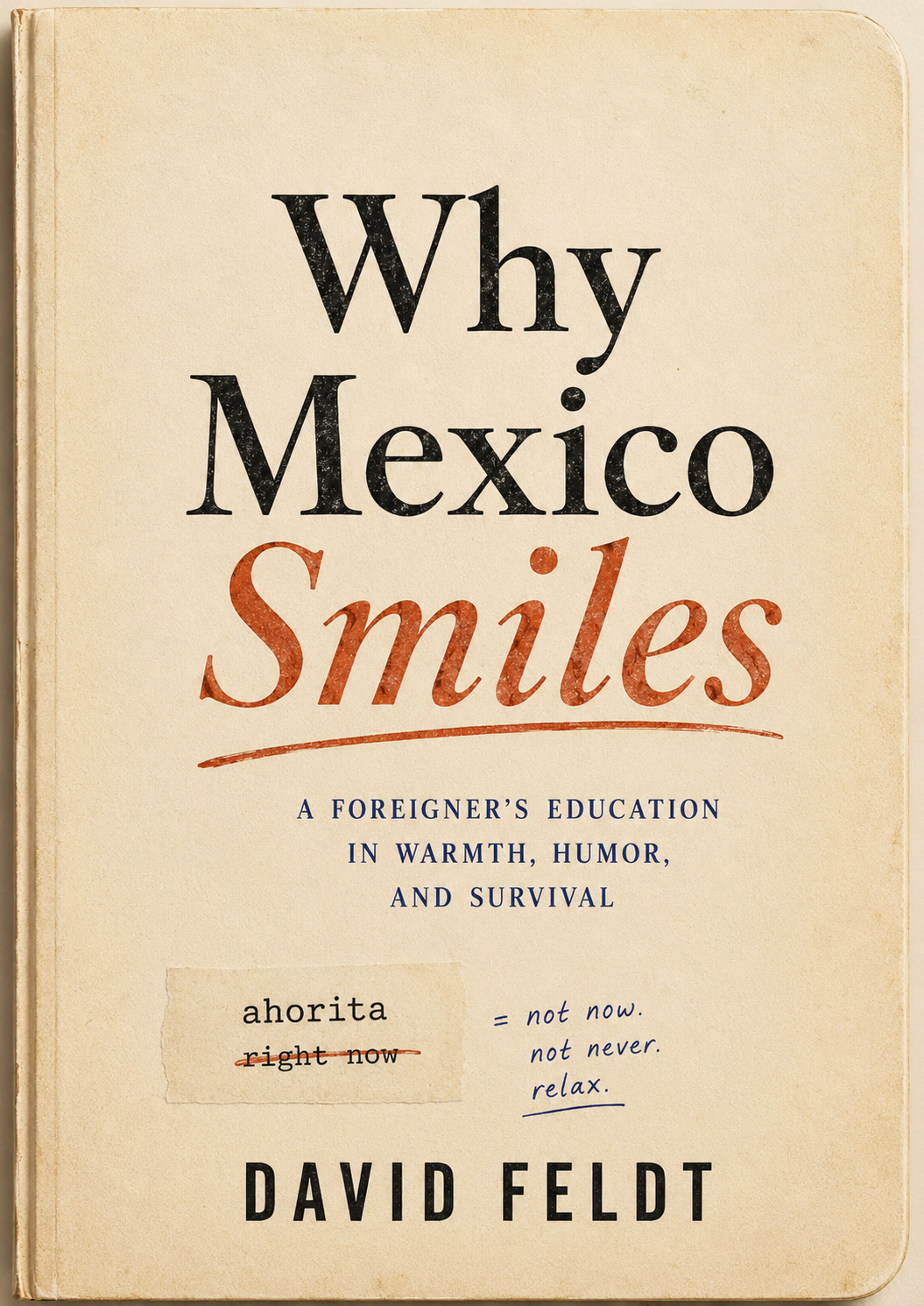
Why Mexico Smiles
A Foreigner's Education in Warmth, Humor, and Survival
A foreigner comes to Mexico to learn a language and instead learns why Mexicans are the way they are. Read Chapter 1 free, or take home the whole thing.

PalabraFlow
Your conversation operating system for Mexico
40 real-life situations, practiced out loud with an AI tutor that talks back in Mexican Spanish and scores how you sound. Stop translating, start answering.