The Most Mexican Phrase Ever: 'No Manches'
I was at a Mexican friend's apartment when his cousin told a story about getting lost in the metro for two hours. My friend's reaction, said three times in twenty seconds:
"¡No manches! ¡No manches! ¿Neta, wey? No manches."
Translation, technically: Don't stain, don't stain, really dude? Don't stain.
Real translation: No way, no way, are you serious? Get out.
This is no manches. Probably the second-most-used exclamation in Mexican Spanish, after órale. And, like most things Mexican Spanish, there's a story behind it about being polite without sounding like a tourist.
What it literally means
No manches breaks down as: no (don't) + manches (you stain, imperative form of manchar).
So: "don't stain."
Don't stain what? Nothing in particular. The verb has no object. It is purely a stylized exclamation, like English get out! or shut up!
The verb is a stand-in. It's polite by virtue of being mild.
What it's actually a substitute for
Here's where it gets interesting.
No manches is the polite Mexican exclamation. The vulgar version is no mames (which comes from a verb I will not translate in detail, but which is mildly obscene).
These two phrases have an identical structure and an identical meaning. The only difference is who you're allowed to say them in front of.
- No mames between friends, drinking, complaining, no elders or kids around
- No manches same energy, but you can say it at the family dinner table
Mexican Spanish does this a lot. It builds a vulgar phrase, then builds a non-vulgar near-rhyme of the same phrase, so you can deploy the same emotional energy in different rooms.
It's a brilliant linguistic move. English doesn't really have an equivalent. No way and no shit both exist, but they're not phonetic cousins. They don't share grammar.
Mexicans engineered around the problem.
The eight registers of no manches
Here is the field guide. Every example below is something I have personally heard.
1. As "no way!" Someone tells you something surprising. "¡No manches! ¿En serio?" "No way! Really?"
2. As "you're kidding!" Someone reveals an unexpected fact. "No manches, ¿es tu hermano?" "You're kidding, that's your brother?"
3. As "get out of here!" Disbelief mixed with delight. "¡No manches, qué chido!" "Get out of here, how cool!"
4. As "are you serious?" Slight reproach. Maybe annoyance. "No manches, ¿llegaste tarde otra vez?" "Are you serious, you were late again?"
5. As "come on, stop." Telling someone they're being ridiculous. "No manches, no te creo nada." "Come on, I don't believe you for a second."
6. As "wow / damn." Reacting to something impressive. "No manches, ¡qué buena comida!" "Damn, what good food!"
7. As "absolutely not / I refuse to believe this." Emphatic rejection of a claim. "¿Que se casa? No manches." "He's getting married? Absolutely not."
8. As filler in storytelling. Said to oneself, mid-story, marking the moment as memorable. "Y entonces me dijo… no manches… que ya no quería trabajar conmigo." "And then he told me… no manches… that he didn't want to work with me anymore."
Eight uses. Same words. The tone does all the work.
How it compares across cities
I've lived in 6 of them. Every city has its master exclamation.
- London: bloody hell (formerly bloody Nora, now considered quaint)
- New York: get the fuck out of here (compressed to gtfo)
- Toronto: no way with rising intonation, or come on with apologetic energy
- Paris: putain (vulgar but universally used)
- Miami: get out or, in Spanish-speaking Miami, no me digas
- Joburg: eish (one syllable, infinite registers)
What's unique about no manches is how deliberately polite it is.
In most cities, the master exclamation is also the vulgar one. London uses bloody even at dinner parties. New York deploys fuck with no register filter. Paris is famous for putain in any context.
Mexico, with its commitment to no quedar mal, engineered a clean version that does the same emotional work. No manches is the most-used Mexican exclamation in part because it can go anywhere. Family dinners. Workplaces. Conversations with elders. Conversations with kids.
A 60-year-old Mexican grandmother can say "¡no manches, mijita!" and nobody flinches. That's the magic.
How to use it
Three rules for the foreigner.
1. Use it as a one-word reaction first. Someone tells you something. You say "¡no manches!" with raised eyebrows. This is the safe entry-level use. You'll get an instant smile back.
2. Don't try the vulgar version. No mames sounds wrong coming from a foreigner who's been here less than a year. Locals can say it because they have a lifetime of social calibration around it. You don't. Stick with no manches.
3. Match the energy. No manches is not whispered. It has air behind it. If you say it flat, it sounds wrong. The phrase needs expression the same way get out! in English needs expression. If you can't summon a little theater, don't use it yet.
What it tells you about Mexican Spanish
The existence of no manches is, in itself, a cultural argument.
It is the argument that politeness should not cost you expression.
Anglo cultures often handle this by simply suppressing reaction. The British understatement. The Canadian half-smile. The Anglo-American "oh, interesting." We mute the reaction to keep things polite.
Mexican Spanish refuses the deal. The reaction is preserved. The vulgarity is engineered out. The phrase is polished until it can be said in front of your tía and your boss and the priest.
No manches is what you get when a culture decides it wants to be both expressive and polite, and refuses to choose.
The result is a phrase you'll hear hundreds of times in your first week in Mexico, and you'll fall in love with by the end of your second.
30-second version of this is on the channel: The Most Mexican Phrase Ever: No Manches. Tell me I'm wrong in the comments. No manches if I'm right.
The app for real Mexican Spanish: PalabraFlow.
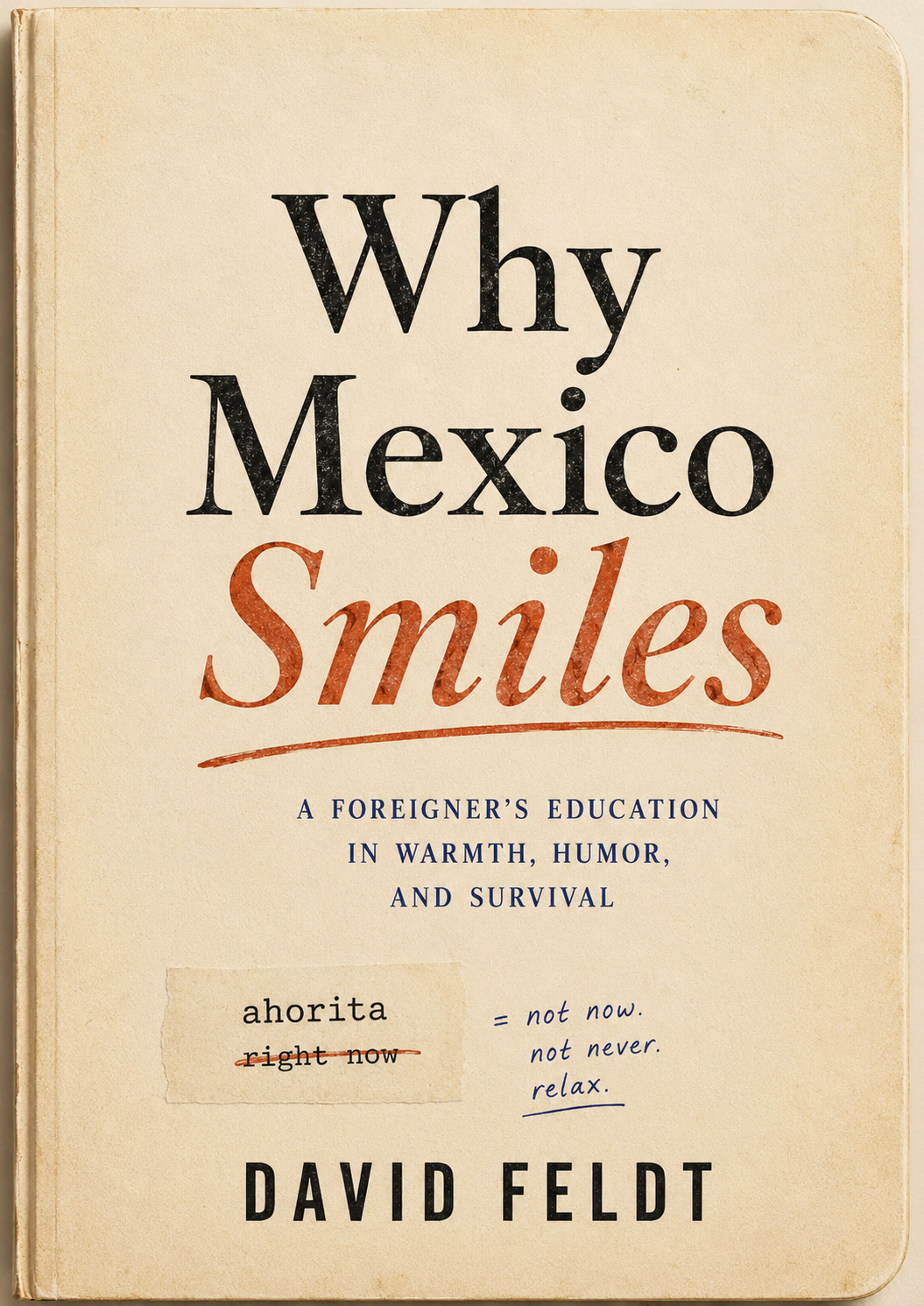
Why Mexico Smiles
A Foreigner's Education in Warmth, Humor, and Survival
A foreigner comes to Mexico to learn a language and instead learns why Mexicans are the way they are. Read Chapter 1 free, or take home the whole thing.

PalabraFlow
Your conversation operating system for Mexico
40 real-life situations, practiced out loud with an AI tutor that talks back in Mexican Spanish and scores how you sound. Stop translating, start answering.