Six Months in Mexico, and Nobody Told Me These Things
I lived in 6 cities before Mexico. Johannesburg, London, Paris, New York, Toronto, Miami. None of them prepared me for the first six months in the Yucatán.
Mexico does not announce itself. It does not orient you. It does not say "here are the rules, please file them by category." It assumes you'll figure things out, the way a child figures out gravity. By experiment.
After two years, here are the seven things I wish I'd known on day one. None of them are in any guidebook. All of them I learned the hard way.
1. Nothing starts when it's supposed to start. And that's not rudeness.
I went to my first Mexican dinner party at 8 PM, as instructed. I was the only person there for two hours.
In Mexico, the time on the invitation is the time the host starts preparing, not the time guests arrive. The actual social arrival time is 90 to 120 minutes later.
This is not Mexican rudeness toward you. This is Mexican kindness toward the host. Arriving on time would put pressure on the host to be ready. Arriving late gives them grace.
After two years, I now arrive 90 minutes late to Mexican dinner parties and feel slightly impatient that the others aren't there yet.
2. The body is welcome at the table.
In Toronto, nobody comments on your body. In Mexico, everyone does. Gordito. Flaco. Güero. Mira qué flaquito estás. Te ves un poco cansado, ¿qué cenaste?
The first three months, I bristled at every comment. The next three months, I started to recognize the comments were not criticism. They were engagement. Mexican intimacy includes the body. Anglo intimacy specifically excludes it.
This took me longer to internalize than almost anything else.
3. The grocery store has unwritten rules.
In Mérida, I was sternly informed, by a kind older woman, that I was holding up the line because I had been packing my own grocery bags too slowly.
This was confusing because in Toronto I had been trained, by years of cashiers giving me side-eye, to pack the bags myself, fast, while the next customer was being rung up.
In Mexico, you don't pack the bags. There's a bagger. Often a kid earning tips. You let them do it. You wait. Then you tip them. Trying to pack the bags yourself is taking work from a child, which is rude in a way that took me four months to identify.
Every culture has rules about where the lines of professional roles are. Anglo culture has weakened most of those lines. Mexico has kept them. Respect the bagger.
4. Greetings are not optional.
If you walk into a small Mexican store, café, or office and don't say "buenos días" or "buenas tardes," you have already insulted everyone in the room.
In Canada, you can walk into a Tim Hortons silently, get your coffee, and leave silently. Nobody notices.
In Mexico, the greeting is the opening of the social space. Skipping it is not just impolite. It is a kind of denial that the other people exist.
The greeting is also a farewell. When you leave, "que les vaya bien" (may things go well for you). Not optional. Not a flourish. The bookends of the interaction.
After six months I had this down. The first three months, half the abuelas in my neighborhood thought I was rude.
5. Ahorita is not now.
I've written about this elsewhere but it bears repeating in the six months context: ahorita will destroy your sanity if you don't recalibrate fast.
When the plumber says he's coming ahorita, he's coming sometime today, maybe tomorrow.
When your friend says ahorita te marco, expect a call within a few hours, or tomorrow, or never.
When your mom says ahorita voy, mamá, she's coming right now.
The same word means three different things. The difference is relational, not lexical. You'll never figure it out from context alone. You have to feel the relationship between the speaker and what they're saying ahorita about.
This was, for me, the single biggest recalibration of the first six months.
6. Hospitality is mandatory and also serious.
In Toronto, if you visit someone's house, they ask if you'd like coffee. They produce coffee if you say yes. The transaction is light.
In Mexico, if you visit someone's house, you are getting fed. Period. There is no opting out.
You will be offered agua de jamaica. You will be offered a snack. If it's near a meal, you will be offered the meal. Refusing all of these is not allowed. The host has prepared for your arrival, even if your arrival was unannounced.
The correct move is to accept one thing graciously. Drink the water. Eat the small snack. Express appreciation. Do not finish so quickly that you seem to be racing through. Do not leave anything untouched.
The hospitality is not optional, but neither is your acceptance of it.
This was harder for me to learn than the ahorita thing. Years of Anglo "oh no, I couldn't possibly" had to be unlearned. The phrase "no, gracias, ya comí" is not always available to you. Sometimes you have to eat the second sandwich.
7. The weather is not negotiable.
The Yucatán is hot. Brutally, constantly hot, from May through September. 35°C with 80% humidity is normal. By 2 PM, the air shimmers.
Mexicans handle this through cultural adaptation, not air conditioning. The whole society shifts:
- Heavy lunch at 2 PM. Light evening meal at 9 PM.
- Siesta or quiet hours from 3 to 5 PM. Most small businesses close.
- Outdoor social life happens after 6 PM, when the heat breaks.
- Nobody asks if you're "managing the heat." Everybody just is.
If you try to live a Toronto schedule in a Yucatán climate, you will die. If you adapt, the heat becomes weather. Normal. Manageable. Even pleasant in its rhythm.
The lesson is wider than weather. Mexicans don't fight nature. They live around it. This is true of climate, of time, of conflict, of food. The pattern is everywhere once you see it.
What I'd tell new arrivals
After 6 cities and 6 months in the Yucatán, here is the one piece of advice I'd give to someone arriving for the first time.
"Slow down. Watch more than you ask. Eat what they give you. Greet everyone. Don't apologize when you didn't do anything. And when the plumber says ahorita, pour yourself a drink."
That's the orientation manual.
The rest you learn the same way I did. By watching. By getting it wrong. By paying attention to who gets visibly annoyed.
The Yucatán is patient. It will give you time.
The matching 30-second version is on the channel: 6 Months in Mexico… Nobody Told Me This. Tell me what I missed in the comments.
The app for real Mexican Spanish: PalabraFlow.
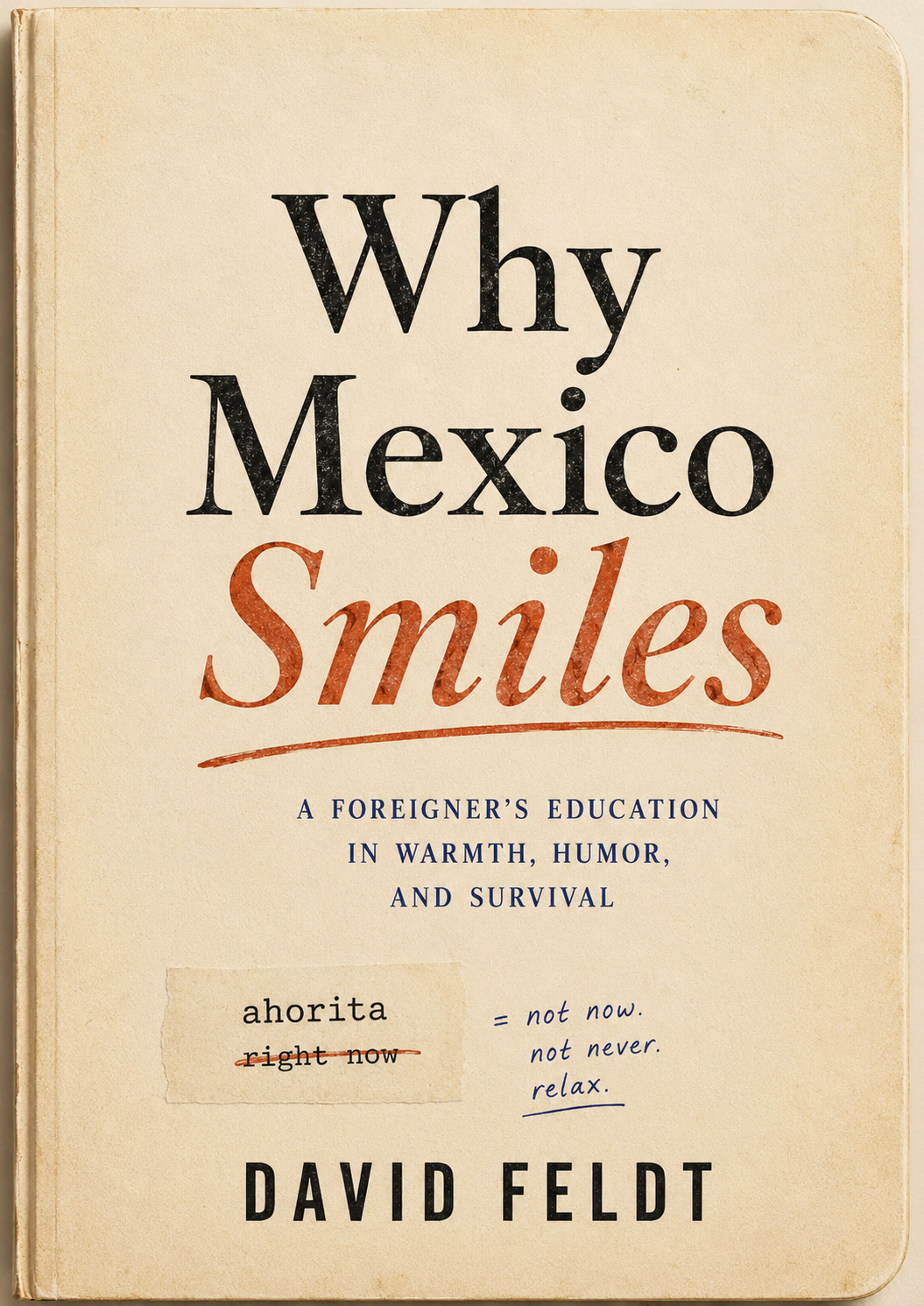
Why Mexico Smiles
A Foreigner's Education in Warmth, Humor, and Survival
A foreigner comes to Mexico to learn a language and instead learns why Mexicans are the way they are. Read Chapter 1 free, or take home the whole thing.

PalabraFlow
Your conversation operating system for Mexico
40 real-life situations, practiced out loud with an AI tutor that talks back in Mexican Spanish and scores how you sound. Stop translating, start answering.